
Quotation vs invoice: what is the difference?
Abdul Wahed Nur · · 1 min read
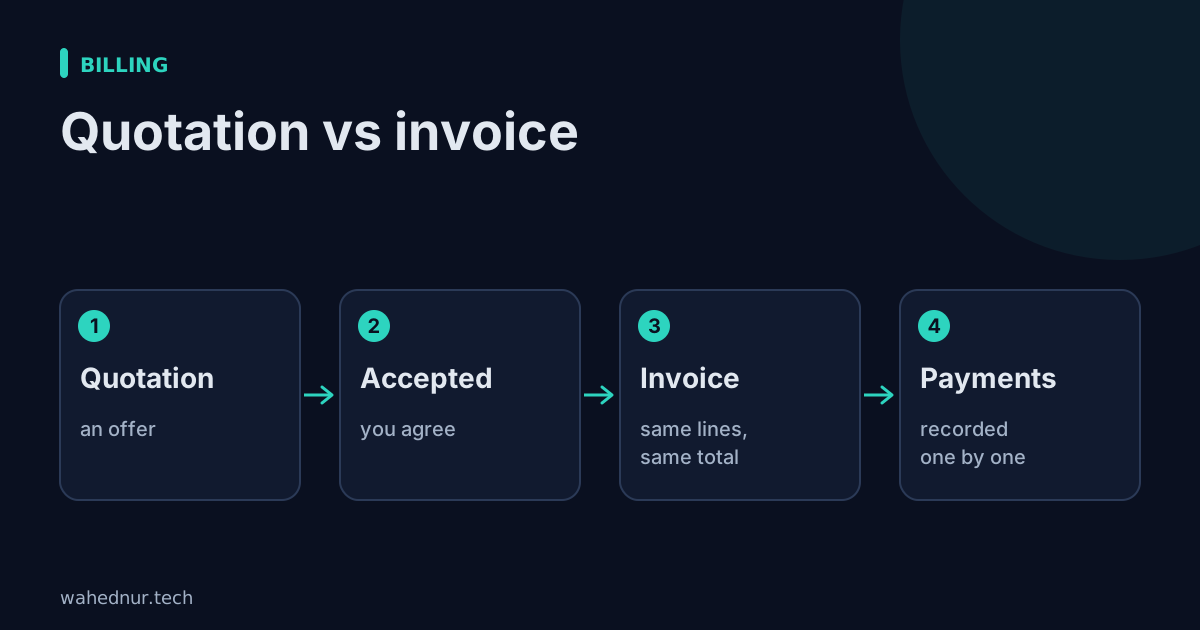
In short: A quotation is an offer. An invoice is a bill. The accepted quotation becomes the invoice, so nothing is retyped.
Both documents list work and prices, so they look alike. They do very different jobs.
| Quotation | Invoice | |
|---|---|---|
| Purpose | An offer: "this is what it would cost" | A bill: "this is what you owe" |
| When | Before work starts | When payment is due |
| Binding? | Only once you accept it | Yes, for the agreed amount |
| Can it expire? | Yes, it has a validity date | It has a due date instead |
How they connect in my workflow
- I send a quotation.
- You accept it (or decline, or ask for changes).
- The accepted quotation is converted into an invoice with the same lines and total.
- The invoice is issued and, from then on, its lines cannot be edited. This keeps the record honest for both of us.
- Payments are recorded against the invoice until it is fully paid.
The point of converting instead of retyping is simple: the invoice can never quietly differ from what you accepted.
A rule I keep
An invoice stays open until it is fully paid. A partial payment is recorded as a partial payment, not rounded away, and the remaining amount stays visible to you and to me.