
PostgreSQL, Redis and Celery: what each one does in a business system
Abdul Wahed Nur · · 1 min read
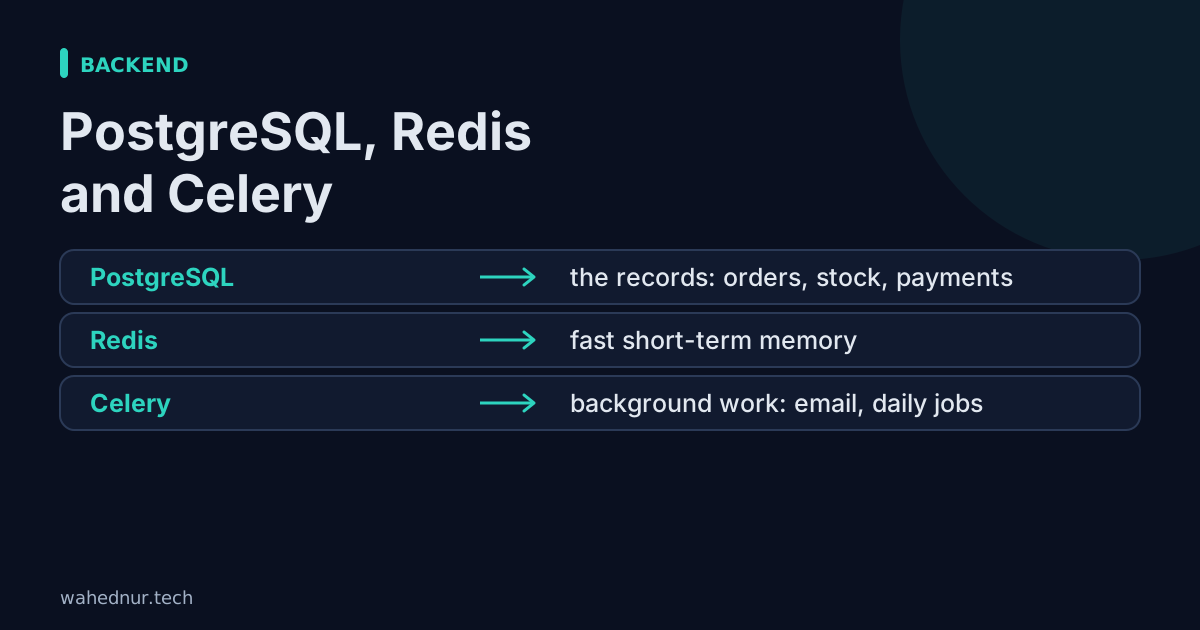
In short: PostgreSQL keeps the records, Redis gives quick memory, Celery does work in the background.
PostgreSQL: the memory of the business
It stores orders, customers, stock and payments. It is strict: if two people try to buy the last unit at the same time, it can make sure only one succeeds. For money and stock, strictness is the point.
Strengths: reliable, handles relationships well (an order has lines, payments, a customer), good with exact decimals for money. Costs: needs backups and monitoring. A managed database costs money, and a self-hosted one costs attention.
Redis: fast short-term memory
It keeps data that is needed quickly and can be rebuilt, such as cached results, and acts as the waiting room for background jobs.
Strengths: very fast, simple. Costs: it is not the place for records that must never be lost. I keep the real records in PostgreSQL.
Celery: work done in the background
Some tasks should not make a customer wait: sending email, creating a courier consignment, regenerating SEO text, billing a subscription each day. Celery runs them in a separate worker.
Strengths: the website stays quick, failed jobs can be retried, scheduled jobs run daily without anyone remembering. Costs: it is one more process to keep running. If the worker is stopped, those jobs wait. I design important flows, such as sign-in emails, to try sending directly first so a stopped worker does not block a customer.
Do you need all three?
- A small site with a contact form: probably not.
- A store with orders, stock, emails and scheduled work: yes, and they pay for themselves in reliability.