
Why I never mix dollars and taka in one invoice
Abdul Wahed Nur · · 1 min read
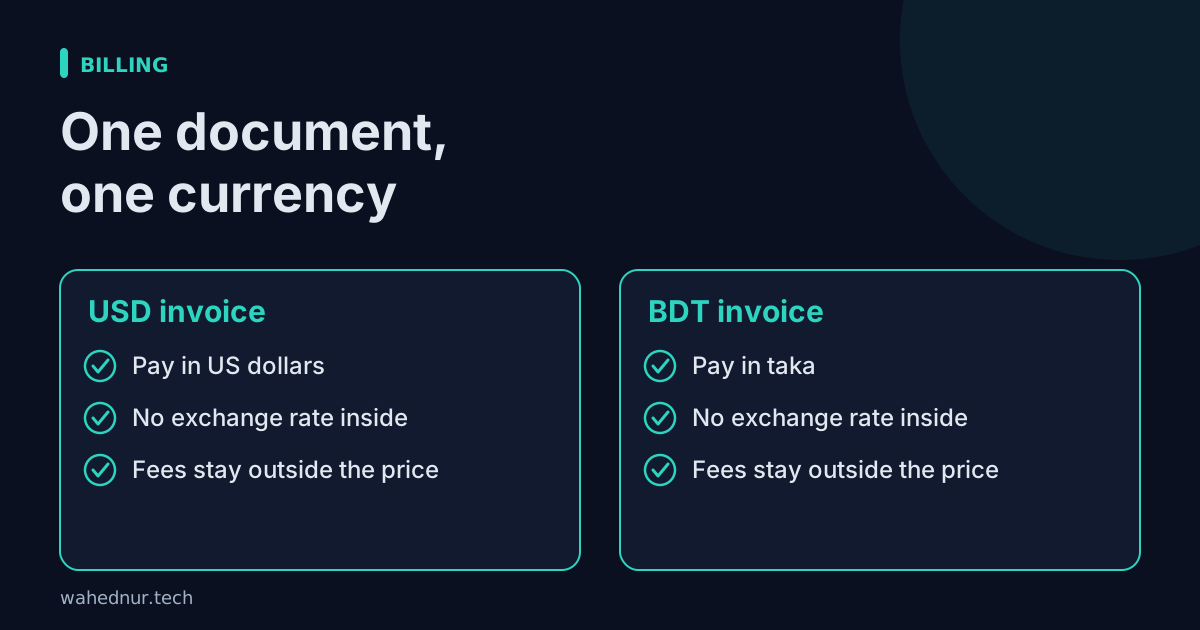
In short: One document, one currency. No hidden exchange rate, and fees stay outside your price.
I work with clients in Bangladesh and abroad. Every quotation and every invoice is in one currency, US dollars or Bangladeshi taka.
Why
- No hidden rate. If a document mixed currencies, someone would have to pick an exchange rate, and the rate moves. Neither side should be surprised on the day of payment.
- Clean books. Dollar income and taka income are reported separately, never added together. A total in a made-up "combined" figure helps nobody.
- Fewer disputes. The amount on the invoice is the amount you pay. Conversion, if any, is between you and your bank.
What about fees?
Banks and payment services often charge a conversion rate, a transfer fee or a bank charge. These are outside the invoice. When I bring dollars home as taka I record the fees and the rate I actually got, so I know the real cost of every dollar. I do not add those fees to your price.
Choosing a currency
If you are in Bangladesh, taka is usually simplest. If you pay from abroad, dollars are usually simplest. If you are unsure, ask before the quotation is made, since the currency is fixed once it is issued.